What BPM Should a Rap Beat Be? A Tempo Guide
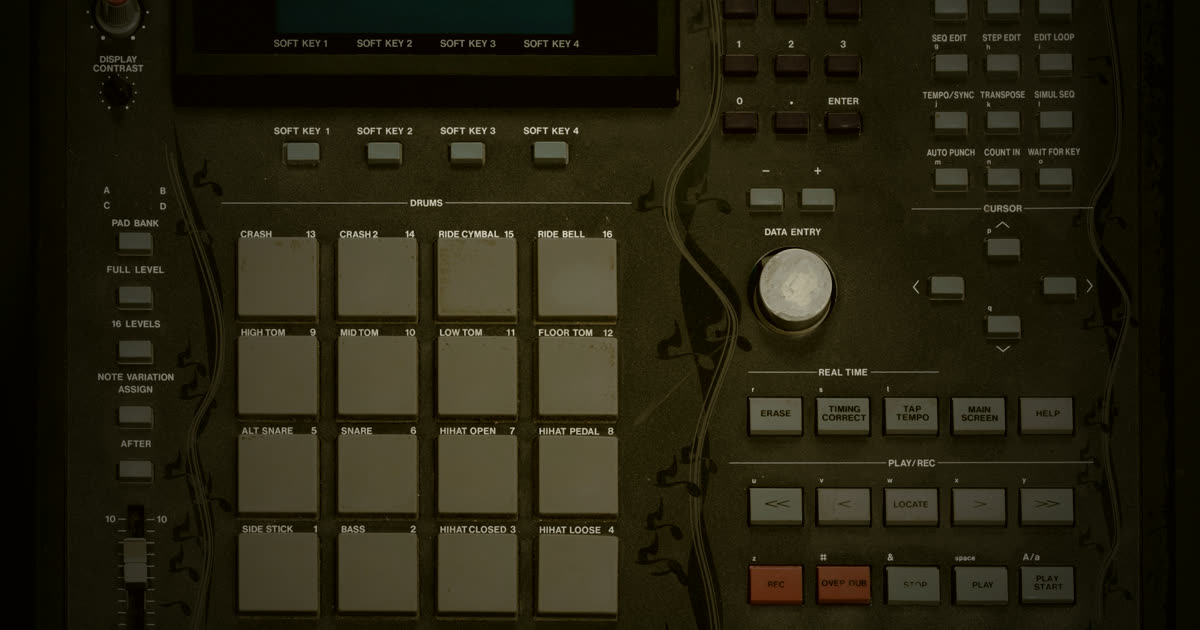
BPM — beats per minute — is the tempo of a beat. It's the single number that decides how a song feels before anyone hears a word. Pick wrong and your flow fights the drums the whole way through.
Quick reference by subgenre
| Style | Typical BPM | Feel |
|---|---|---|
| Boom bap | 85–95 | Head-nod, conversational |
| Trap | 130–150 (felt as 65–75) | Spacious, hi-hat driven |
| Drill | 138–145 | Sliding 808s, urgent |
| West coast / G-funk | 90–100 | Bounce, laid back |
| Afrobeats | 100–115 | Danceable, syncopated |
| Cloud rap / ambient | 70–85 | Slow, floating |
The trap tempo trick
Here's what confuses most new artists: a trap beat labeled 140 BPM doesn't feel fast. It feels slow and heavy.
That's because trap counts double-time. The hi-hats race at 140, but the actual pulse — where you'd nod your head — sits at 70. So you can rap at a relaxed pace or switch to rapid-fire triplets over the exact same beat without changing tempo.
This is why trap is so flexible for flow. One instrumental gives you two speeds. If you're still finding yours, our guide to finding your flow covers switching between them.
Choosing a tempo for your voice
Tempo isn't just style, it's physiology. Some voices sit naturally in a pocket, others need room.
If you have a deep, heavy voice: slower tempos (80–95) give each word space to land. Crowding a low voice at 150 turns it to mush.
If you have a lighter, faster delivery: 130–150 trap lets you cram syllables without sounding rushed.
Not sure? Record the same eight bars over a 90 BPM boom bap beat and a 140 BPM trap beat. One will feel like work and one will feel like breathing. That's your answer.
Tempo and song length
Tempo quietly decides how long your song is. At 90 BPM, sixteen bars runs about 43 seconds. At 140 BPM, the same sixteen bars runs 27 seconds.
That matters for streaming. A song needs to hold attention past the 30-second mark to count as a full play on most platforms. At faster tempos you need more bars to fill the same time — plan your verse lengths around it.
Matching a reference track
The fastest way to find your tempo: pick a song you wish you'd made and find its BPM. Tap it out with our free BPM tap tool — click along with the kick for ten seconds and it gives you the number.
Then filter beats by that tempo range. Every beat in the catalog has its BPM listed, and you can filter by tempo directly.
Can you change a beat's tempo?
Technically yes — most DAWs will time-stretch. Practically, be careful. Push more than 5–8 BPM in either direction and drums start sounding artificial, 808s lose their weight, and any live-sounding element gets a warbly artifact.
If you need a specific tempo, it's almost always better to find a beat that already lives there than to stretch one that doesn't. With a catalog this size, filtering by BPM usually finds it.
The rule that actually matters
There is no correct BPM. There's only the tempo where your voice sounds like itself. Every number above is a starting point, not a rule — plenty of classics ignore all of them.
Test it before you commit. Every beat here previews instantly, and the free demo download lets you try writing over it before you spend anything.
Once you've got the tempo right, pick the beat and get to work.
Find your next beat
Dark trap & boom bap type beats — ScHoolboy Q, Kendrick, Don Toliver territory. Preview every beat, license in two clicks.
Keep reading
 Craft
CraftHow to Write Over a ScHoolboy Q Type Beat
Flow placement, subject matter, use of space and ad-libs — how to write to west coast production without imitating the artist the beat is named after.
 Genres
ScHoolboy Q's Albums: A Producer's Reference
Album by album, the production teams and sonic shifts across ScHoolboy Q's catalog — written from a producer's angle, for anyone studying the west coast sound.
 Genres
West Coast Drums: Why They Hit Different
A producer's guide to the drum programming behind ScHoolboy Q type beats — snare layering, swing, kick placement, and why quantized drums kill the bounce.