How to Record Rap Vocals at Home
The gap between a bedroom vocal and a studio vocal is mostly the room, not the microphone. Fix that order and a $150 setup gets you further than $2,000 spent wrong.
What you actually need
- An audio interface with a decent preamp and phantom power. Focusrite Scarlett Solo, Audient iD4, Motu M2 — any of them, around $130–200.
- A microphone. Large-diaphragm condenser (Audio-Technica AT2020, Rode NT1) for detail, or a dynamic (Shure SM7B, SM58) if your room is bad.
- Closed-back headphones. Open-backs bleed into the mic.
- A pop filter. $10. Non-negotiable — it kills the plosives that ruin takes.
That's it. Skip the mic upgrade until the room is handled.
The room is 80% of it
Your bedroom is a box of parallel hard surfaces. Sound bounces between them and arrives at the mic milliseconds late, which is what "roomy" and "amateur" actually sound like.
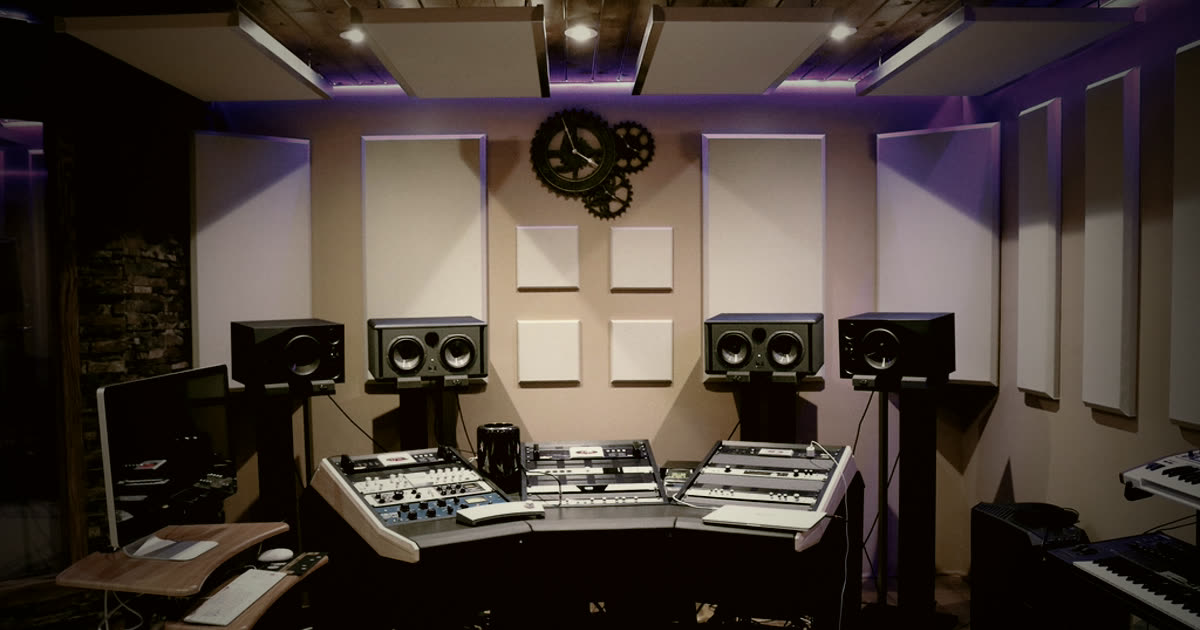
Cheapest effective fix: record facing into a closet full of clothes, or hang a thick duvet on a mic stand behind the microphone. Fabric absorbs the reflections. It looks ridiculous and it works better than a $300 mic upgrade.
Never record in the exact center of the room. Standing waves pile up there. Off-center, facing an absorbent surface, is the sweet spot.
Avoid the corner behind you being empty. Reflections off the back wall are the ones that get into the mic.
Interface settings that matter
Gain: set it so your loudest ad-lib hits around -6 dB. If the meter touches red once, you've clipped and the take is unusable. Digital clipping cannot be fixed later.
Sample rate: 44.1 kHz or 48 kHz. Higher is not better, it's just bigger files.
Bit depth: 24-bit. This one does matter — it gives you headroom to record conservatively.
Buffer size: as low as your computer allows without crackling, usually 128 or 256. High buffer means you hear your voice late, and you cannot rap in time with delayed monitoring.
Mic technique
Distance: 6–8 inches. Closer gets you the bass-heavy "proximity effect" that sounds warm on ad-libs but muddy on a full verse.
Angle: slightly off-axis — talk past the mic, not straight into it. Reduces plosives and sibilance before they exist.
Consistency: the most common home-recording mistake is moving. If you lean in and out while rapping, your volume swings wildly and no compressor fixes that cleanly. Plant your feet.
Take strategy
Don't record whole verses in one pass hunting for a perfect take. Record in four-bar chunks, three passes each. You'll get a usable version of every section in about the time one flawless full take would have taken — and it won't sound stitched together if your tone stays consistent.
Always double your hook. Two full takes of the same hook, panned slightly apart, is the sound of a professional record. Verses can be single with doubles only on the last words of each line.
Record ad-libs separately. They're a different performance with different energy and they need their own volume.
Monitor at low volume
Loud headphones make everything sound good and make you push your voice unnaturally. Monitor quietly enough that you can hear your natural voice in the room alongside the beat. You'll perform more accurately and blow out fewer takes.
Get the right file first
Record over an untagged WAV, not a tagged MP3 preview. The producer tag will bleed into your headphone mix and throw off your timing, and MP3 artifacts get baked into everything downstream. Buying the WAV license before a serious session is the difference between a demo and a release.
If you're just writing, a free tagged demo is fine — that's what it's for.
Then mix it
Recording well makes mixing easy. Our rap vocal mixing guide picks up exactly where this leaves off, and recording over a type beat covers session setup.
Find a beat to record over — every one previews instantly.
Find your next beat
Dark trap & boom bap type beats — ScHoolboy Q, Kendrick, Don Toliver territory. Preview every beat, license in two clicks.
Keep reading
 Craft
CraftHow to Write Over a ScHoolboy Q Type Beat
Flow placement, subject matter, use of space and ad-libs — how to write to west coast production without imitating the artist the beat is named after.
 Genres
ScHoolboy Q's Albums: A Producer's Reference
Album by album, the production teams and sonic shifts across ScHoolboy Q's catalog — written from a producer's angle, for anyone studying the west coast sound.
 Genres
West Coast Drums: Why They Hit Different
A producer's guide to the drum programming behind ScHoolboy Q type beats — snare layering, swing, kick placement, and why quantized drums kill the bounce.