The ScHoolboy Q Sound, Broken Down by a Producer
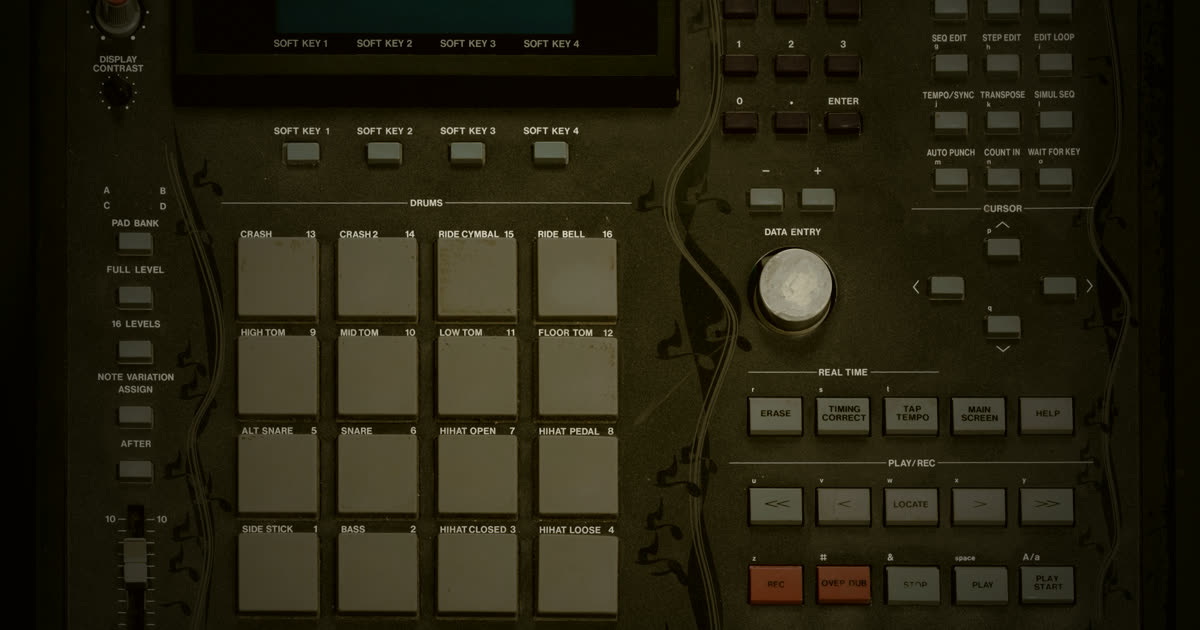
I've made sixty beats in this lane. This is what I've learned goes into them — not a biography, a build sheet.
The drums carry the record
In most modern trap, the 808 is the main event and the drums decorate it. Here it's reversed. The kick and snare are the loudest, most forward elements in the mix, and everything else arranges itself around them.
Practically that means:
- Snare with body, not just crack. A thin snare disappears under an aggressive vocal. These records use snares with audible low-mid weight around 200 Hz, often layered — one sample for the snap, one for the thump.
- Kick that's short. Long decaying kicks blur into the bass. Tight kicks leave the low end to the 808.
- Hi-hats present but not the focus. Rolls happen, but they're a texture, not the hook. If your ear goes to the hats first, the beat has drifted toward generic trap.
Bass that moves, not just sustains
The bass in this style tends to be more melodic and rhythmic than the long, sustained sub of Atlanta trap. It plays a pattern. It syncopates against the kick rather than doubling it.
That difference is most of why these beats feel like they have bounce rather than weight. Bounce is a rhythmic property; weight is a spectral one. This lane wants bounce.
Samples treated as texture
When there's a sampled or sampled-feeling element — a soul chop, a guitar line, a vocal snippet — it's usually:
- Filtered. High end rolled off so it sits behind the drums instead of competing.
- Short. A two-bar phrase looping, not an eight-bar development.
- Slightly detuned or dusty. Perfect fidelity sounds wrong here. A little grit reads as intentional.
The tempo spread nobody expects
The stereotype is one tempo. In practice the range is wide. Across my ScHoolboy Q lane the beats run from 70 to 163 BPM, with the median around 108.
That spread exists because the style is defined by attitude and drum treatment more than by speed. A 90 BPM beat and a 150 BPM beat can both sit in this lane if the drums behave right.
Space for the voice — the part most producers miss
This is the single most important thing and the hardest to hear until you've mixed a few.
The mid-range between roughly 1 and 4 kHz stays relatively open. That's where consonants live. A dense pad or a bright lead sitting in that band will fight every word the rapper says, and no amount of vocal EQ fully fixes it afterward.
When I'm finishing a beat in this style, I check it by muting the drums and asking: is there a hole in the middle where a voice goes? If the beat sounds complete without a vocal, it's too full.
That's also why these beats are good for artists still developing. There's nowhere for a weak vocal to hide, so you find out fast what needs work — same reason boom bap is a good training ground.
Six from the catalog
Different corners of the same lane — slow and heavy through fast and aggressive:
 Yucky Blucky150 BPM · Schoolboy Q
 Wi-Fi150 BPM · rap beat
 Combo160 BPM · dark trap
 Big city160 BPM · rap beat
 Meteorite152 BPM · rap beat
 Arsonist163 BPM · kendrick lamar type beat
Every one previews instantly and has a free tagged demo to write over.
Writing over it
The beat gives you attitude and pocket. What it doesn't give you is a personality — that's the part people copy wrong.
Don't imitate the delivery. Take what the arrangement offers: gaps to punctuate, drums to lock to, and a mid-range that's been deliberately left empty for you. Our Kendrick guide covers the adjacent TDE lane, which trades some aggression for harmonic depth.
If you're picking a beat to actually record over, how to choose a beat walks through matching one to your voice.
Browse the full ScHoolboy Q collection — 60 beats, free tagged demo on each.
Find your next beat
Dark trap & boom bap type beats — ScHoolboy Q, Kendrick, Don Toliver territory. Preview every beat, license in two clicks.
Keep reading
 Craft
CraftHow to Write Over a ScHoolboy Q Type Beat
Flow placement, subject matter, use of space and ad-libs — how to write to west coast production without imitating the artist the beat is named after.
 Genres
ScHoolboy Q's Albums: A Producer's Reference
Album by album, the production teams and sonic shifts across ScHoolboy Q's catalog — written from a producer's angle, for anyone studying the west coast sound.
 Genres
West Coast Drums: Why They Hit Different
A producer's guide to the drum programming behind ScHoolboy Q type beats — snare layering, swing, kick placement, and why quantized drums kill the bounce.